2026 Internal Medicine Guideline Updates (1): Cardiovascular
What changed in cardiovascular guidelines this year
Contents
It was a year when quite a few guidelines used in primary care changed. I studied each one as it came out, but I never put them all in one place, so this post is part study notes, part roundup.
For each guideline, I’ll try to keep it short and focus on what actually changed.
If you want the big picture first, check the table of contents above.
It got long fast… so cardiovascular and metabolic disease comes first.
These are personal study notes, not medical advice for any individual patient. For clinical decisions, refer to the original guidelines and your own clinician.
Cardiovascular and Metabolic Disease
Dyslipidemia: 2026 ACC/AHA Multisociety Guideline
Until now, we estimated a patient’s 10-year cardiovascular risk and decided on cholesterol medication from there.
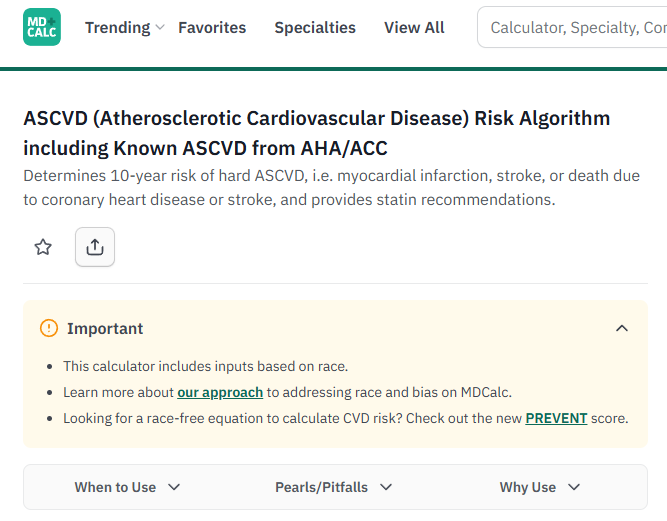
Mostly with something like the MDCalc app, like this.
But now there’s a new score: PREVENT-ASCVD!
Here’s a quick rundown of what changed.
- A new model that calculates 10- and 30-year cardiovascular risk for ages 30 to 79.
- If it’s borderline, you can reclassify using CAC, meaning how much calcium has built up in the coronary arteries.
- Before, cholesterol medication was recommended at a 10-year risk of 7.5% or higher. Now it may be considered from 3%. At 5–10% it should be considered, and at 10% or higher the goal is high-intensity statin therapy with at least a 50% LDL-C reduction and LDL-C below 70 mg/dL.
- LDL-C and non-HDL-C targets, which had been dropped, are back. They depend on risk: very high risk is LDL < 55 and non-HDL < 85, other ASCVD or high risk is LDL < 70 and non-HDL < 100, and borderline or intermediate risk is LDL < 100.
- Very high risk means two or more major events, or one major event plus two or more high-risk conditions. Major events here are myocardial infarction, acute coronary syndrome, ischemic stroke, and symptomatic peripheral artery disease.
- Lipoprotein(a) should be measured once in adulthood. At 125 nmol/L or above it counts as a risk enhancer, and at 250 nmol/L or above the risk is about doubled, so you aim for LDL < 70, treat, and screen family members.
- apoB seems to be for further judgment, after LDL and non-HDL targets are met. It’s especially useful with triglycerides > 200, diabetes, or LDL < 70.
- People with HIV, diabetes at ages 40–75, or CKD stage 3 or higher should get LDL-lowering therapy regardless of their numbers.
- More room to choose the second drug. Instead of always going to ezetimibe after a statin, it feels more like you pick among ezetimibe, bempedoic acid, PCSK9 mAb and so on depending on the situation.
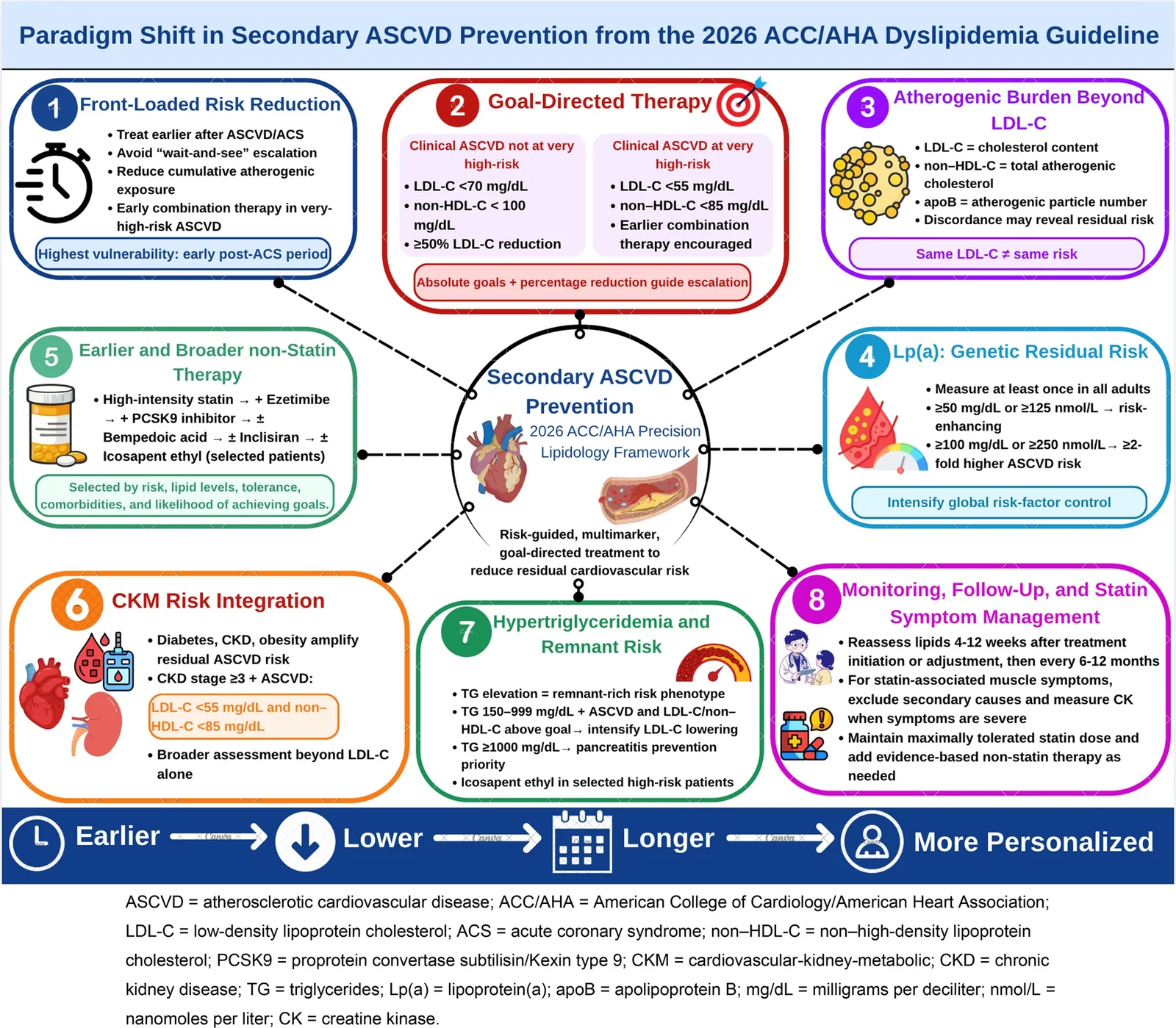
The part that hits closest for me is that the age range now starts at 30.
The old risk calculator was for ages 40 and up, so under 40 I’d usually just recommend lifestyle changes. Now, if PREVENT puts the risk fairly high, statins are on the table even for people in their 30s.
Honestly, once a medication is started it’s hard to stop (adding a drug is an easy call, but reducing or stopping one is often hard), so I used to be careful about starting medication in younger patients (let’s see if exercise and diet do it first). Now I may need to be more proactive.
CKM Syndrome 2026: A Shift in the Obesity Guideline
What is CKM? Cardiovascular-Kidney-Metabolic syndrome.
Simply put, it describes health worsening through the interplay between the heart, the kidneys, and metabolic disease led by diabetes and obesity.
It may sound unfamiliar because the American Heart Association (AHA) only defined it in 2023, in a Presidential Advisory. Until then, CKD, cardiovascular disease, obesity, and diabetes were all handled separately. The 2026 CKM guideline is the clinical guideline that ties them all together. As far as I know there’s no ICD code for it yet. Metabolic syndrome is probably the closest.
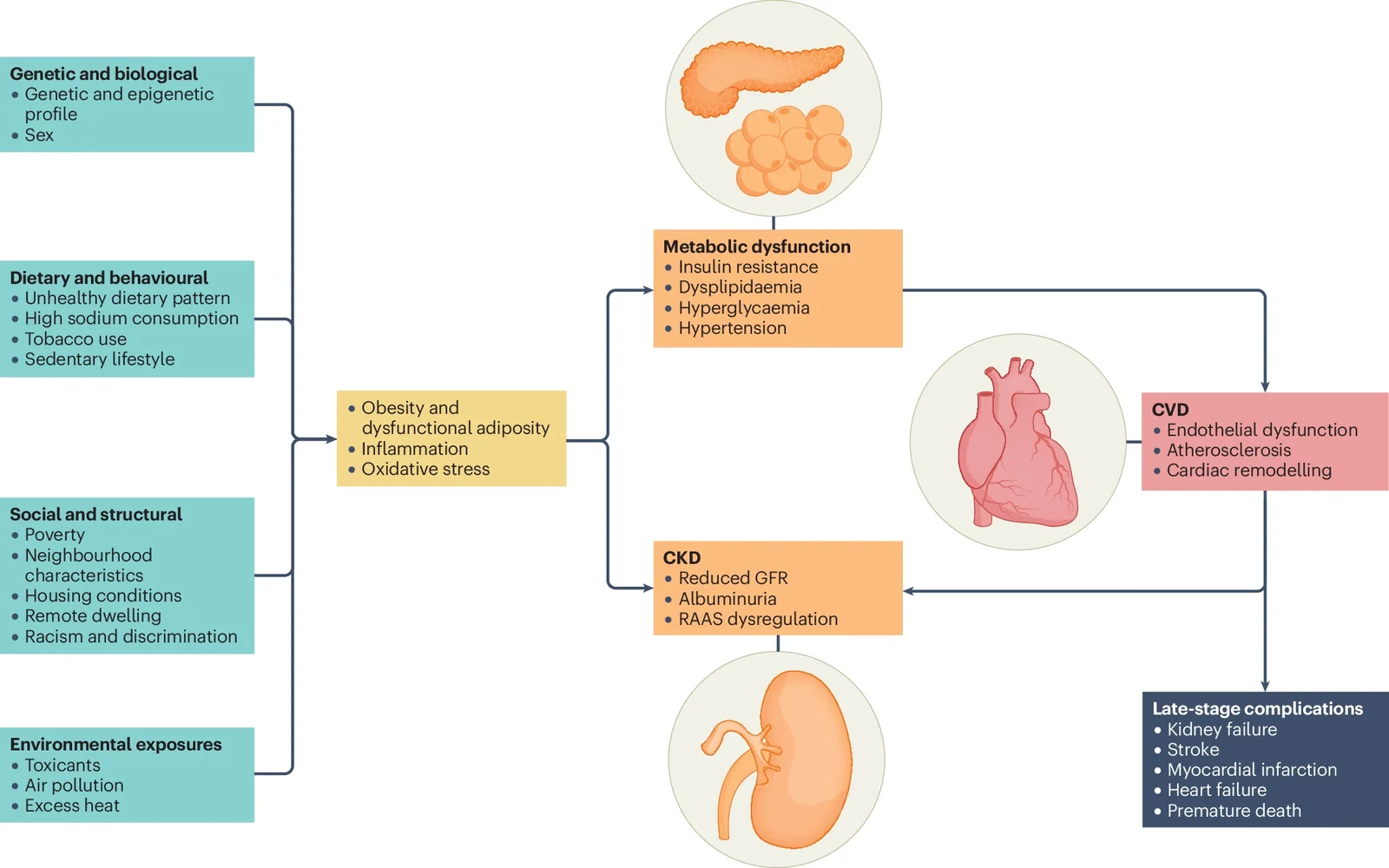
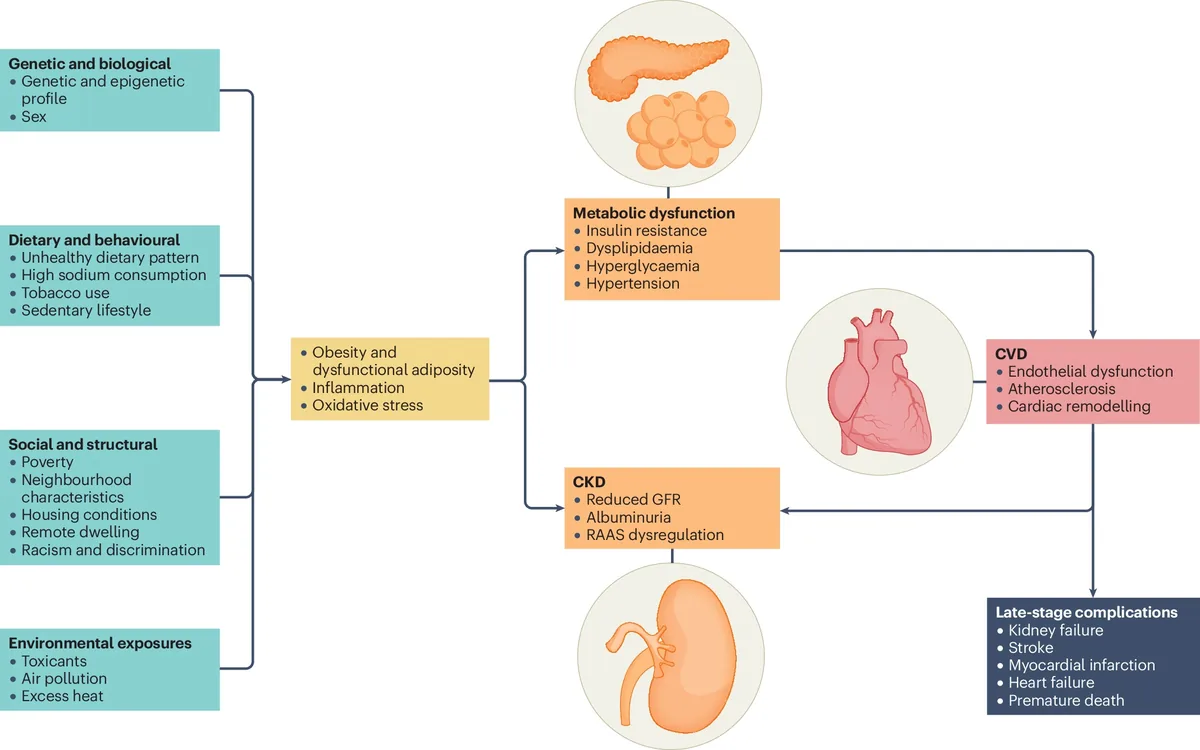
2026 Nature Reviews Nephrology.
Roughly: metabolic dysfunction, CKD, and cardiovascular disease sit on one connected axis.
CKM has stages, from 0 to 4.
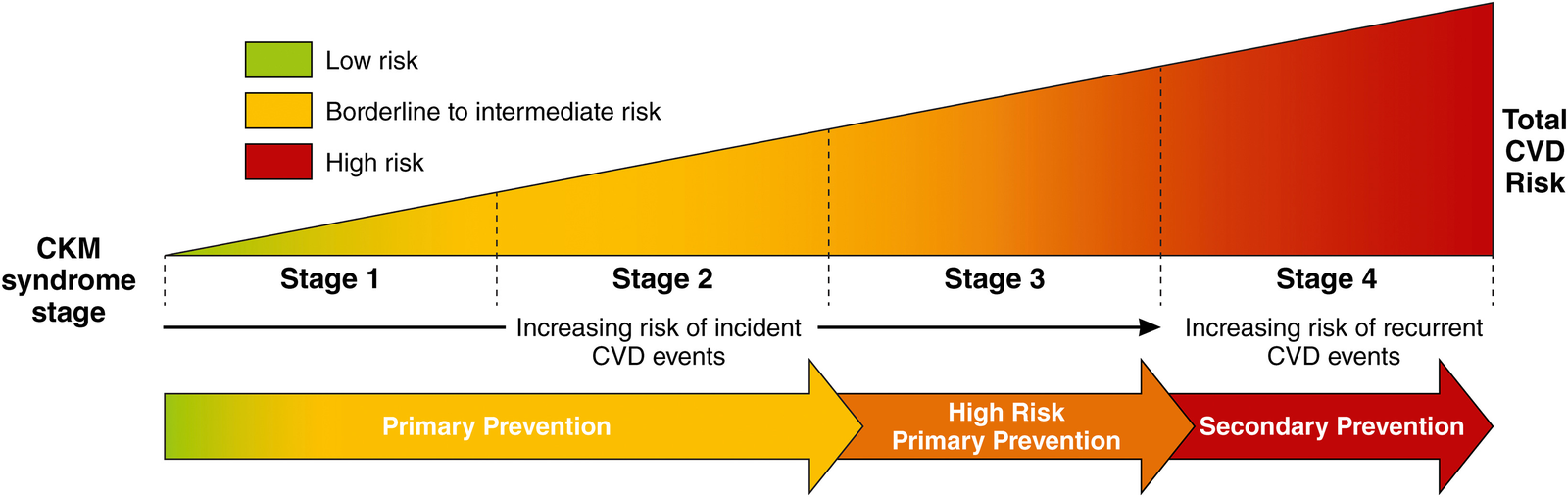
CKD obviously has stages, and medically obesity can be staged too, class 1, class 2 and so on (I’ve never told a patient “you have class n obesity.” They might start to hate me). In that sense it makes sense that CKM has stages.
Anyway, a quick look at the 2026 CKM guideline:
- Stages 0–4 apply to both adolescents and adults. The criteria vary: a PREVENT CVD risk over 20%, atrial fibrillation, heart failure, and so on.
- I’ll skip the detailed screening intervals here.
- Looking at BMI and waist circumference together for weight is worth noting.
- Maybe the biggest achievement is framing obesity and metabolic syndrome as one conceptual flow managed together with CKD and CVD. For CKM stages 2–4, it recommends multidisciplinary care and a person who coordinates CKM care.
People have long said obesity and metabolic syndrome are the root of all disease, but it was really interesting to see them directly linked to other conditions with systematic management starting.
Heart Failure (Second Universal Definition of HF)
The heart failure definition changed a bit too. It was written by AHA, ACC, ESC, WHF and other American and European societies, so you can think of it as a worldwide update.
Here’s a quick rundown of what changed.
- Heart failure used to be split by EF (ejection fraction) numbers into reduced EF, preserved EF and so on: 40% or below was HFrEF (reduced), 41–49% was mildly reduced (HFmrEF), etc.
- They decided to stop using these numeric cutoffs. EF is affected by sex, age, race and other factors, so cutting by numbers alone seemed shaky.
- HFmrEF is gone. Mildly reduced or clearly reduced, the same heart failure drugs help, so it looks like they folded it into HFrEF.
- HFimpEF (improved EF): EF rose by 10 percentage points or more to above 40%.
- Causes used to be split roughly into ischemic and non-ischemic. Now there are about 19 groups: hypertensive, valvular, arrhythmia-related, infiltrative, toxic, pregnancy-related… “Non-ischemic” used to hold a lot of different causes, and this breaks it down further.
- Getting better now has names too, for example:
- Improvement: EF went up but abnormalities remain
- Remission: back to normal, but can relapse
- Recovery: heart function, structure, and symptoms all back to normal
- Realistically, I’d guess most people get to remission and recovery is hard to reach
- Worsening and decompensated HF are now distinguished. Decompensated seems to be judged by whether you needed stronger treatment, like raising the diuretic, to control symptoms.
HFmrEF is gone, but it’ll probably still be around in EMR billing for a while, so expect some confusion in the meantime.
The classification changed, but on the treatment side maybe not much is different.
HFpEF: 2026 ACC Expert Consensus
An update to the 2023 document. Results for finerenone and GLP-1 drugs came out in between, and those seem to be reflected.
What stands out on the definition side is that HFpEF is now seen as a multisystem syndrome driven by visceral fat, inflammation, and metabolic dysfunction together. Like CKM above, the trend lately seems to be seeing diseases as several axes acting together. Our bodies are all connected, so you could call it a more accurate definition.
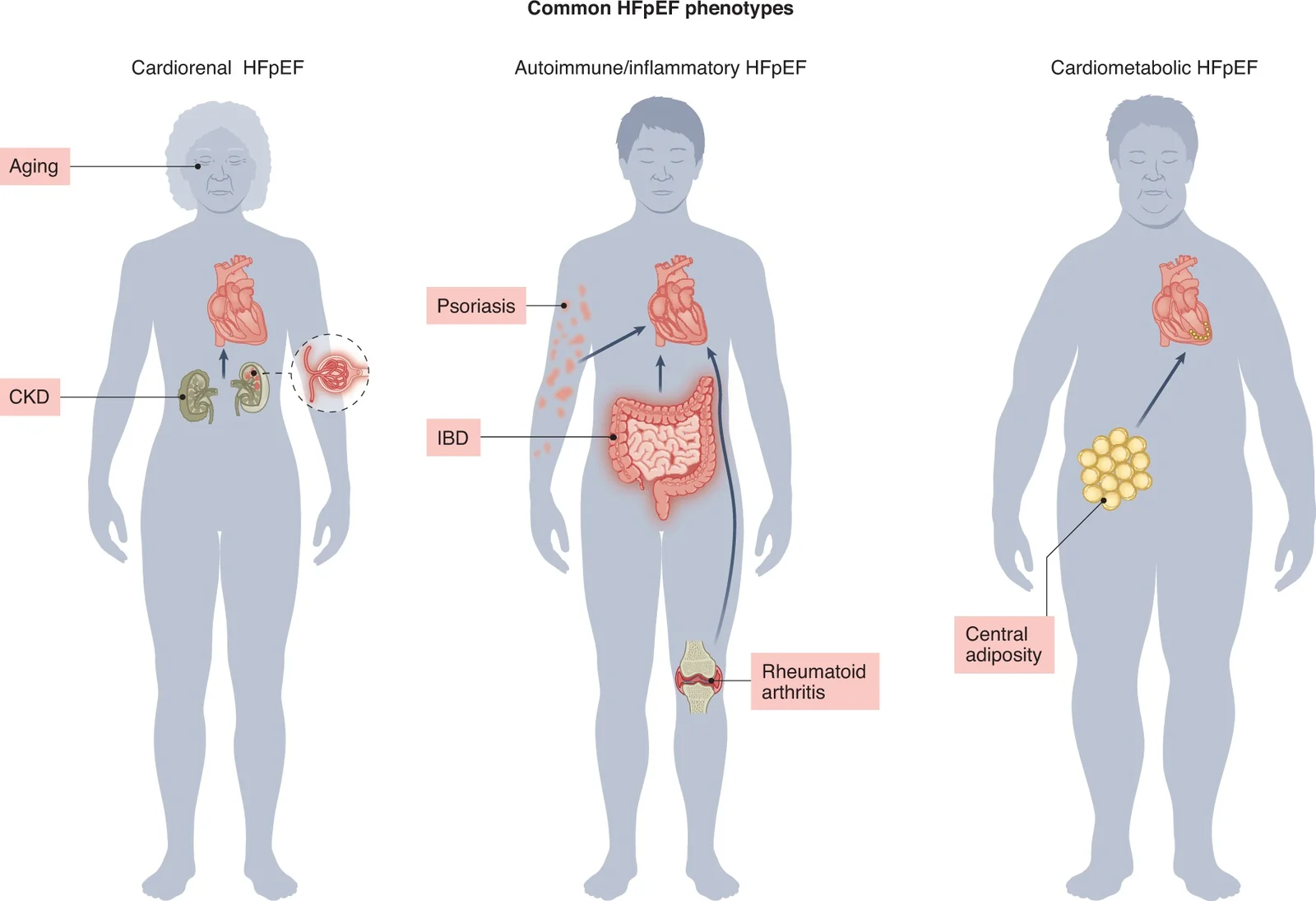
Roughly: HFpEF has different phenotypes, cardiorenal, autoimmune/inflammatory, and cardiometabolic.
Roughly, what changed:
- Diagnosis: screen with H2FPEF and confirm with HFA-PEFF. If both land in the middle range, the next step is stress echocardiography or invasive hemodynamics, but realistically that rarely happens. So in practice, it seems more common to firm up the diagnosis by seeing whether the patient responds to drugs like diuretics.
- But responding to treatment doesn’t confirm HFpEF, so this guideline stresses ruling out conditions that look like HF, such as amyloidosis.
- It stresses again that a low BNP doesn’t rule out HFpEF. Why now? Isn’t heart failure a clinical diagnosis anyway? I guess there’s enough of a habit of ruling out HF on a low BNP that they felt the need to repeat it.
- Drug therapy feels like laying down SGLT2i + nsMRA first (finerenone preferred over spironolactone), then stacking more on depending on symptoms. Roughly like the figure below.
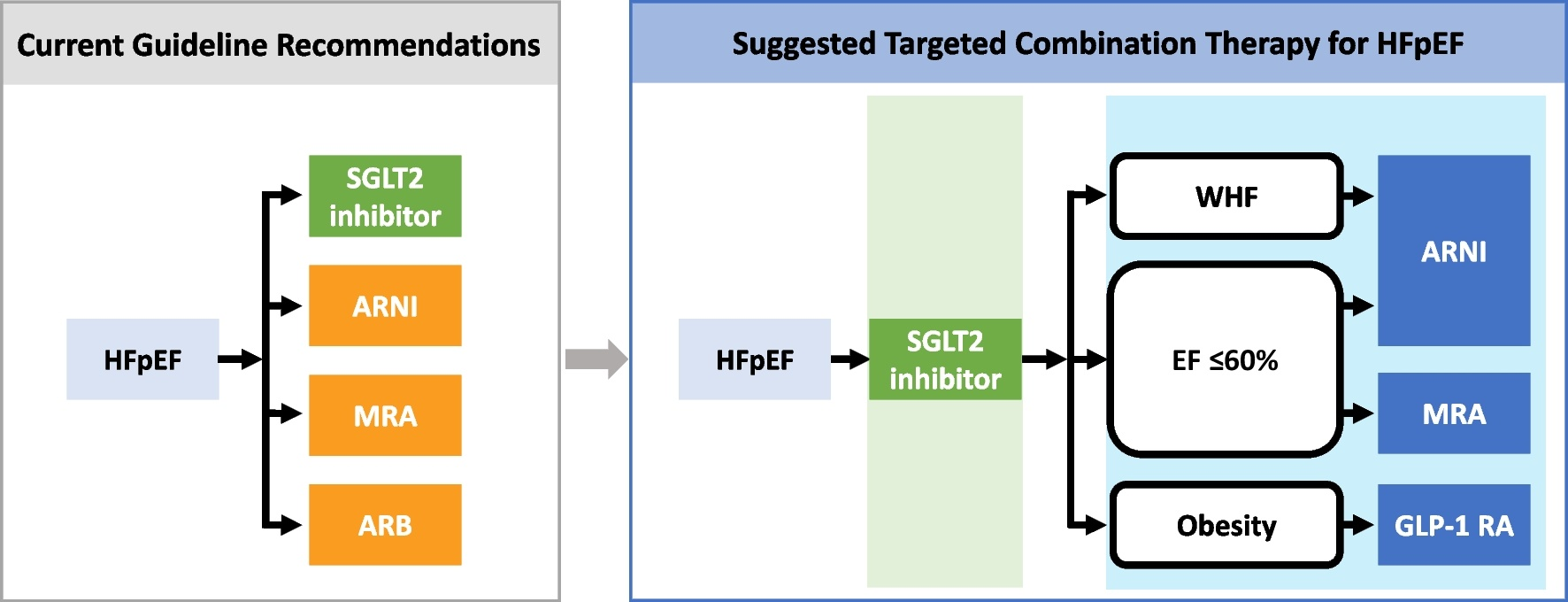
- In HFpEF with obesity, semaglutide and tirzepatide (Wegovy, Mounjaro/Zepbound) apparently meaningfully improved symptoms and reduced cardiovascular death and HF hospitalization. So the recommendation is to prefer these two at BMI 30 or above.
- The practically important part: don’t add beta-blockers out of habit. They’ve never shown benefit in HFpEF, and by keeping the heart rate from rising enough (chronotropic incompetence) they can lower exercise tolerance and actually make things worse. Consider them only for a separate indication like angina or atrial fibrillation.
- ARNI is also worth trying in women or with EF below 55–60%, and if that doesn’t work, consider an ARB.
HFpEF used to feel mostly about symptom control, but now, much like GDMT for HFrEF, there are a lot more options. There’s real evidence to actively consider SGLT2i, MRA, GLP-1 RA and others.
Resistant Hypertension: 2026 ACC Expert Consensus
This is closer to a practical guide for putting the 2025 AHA/ACC hypertension guideline into practice.
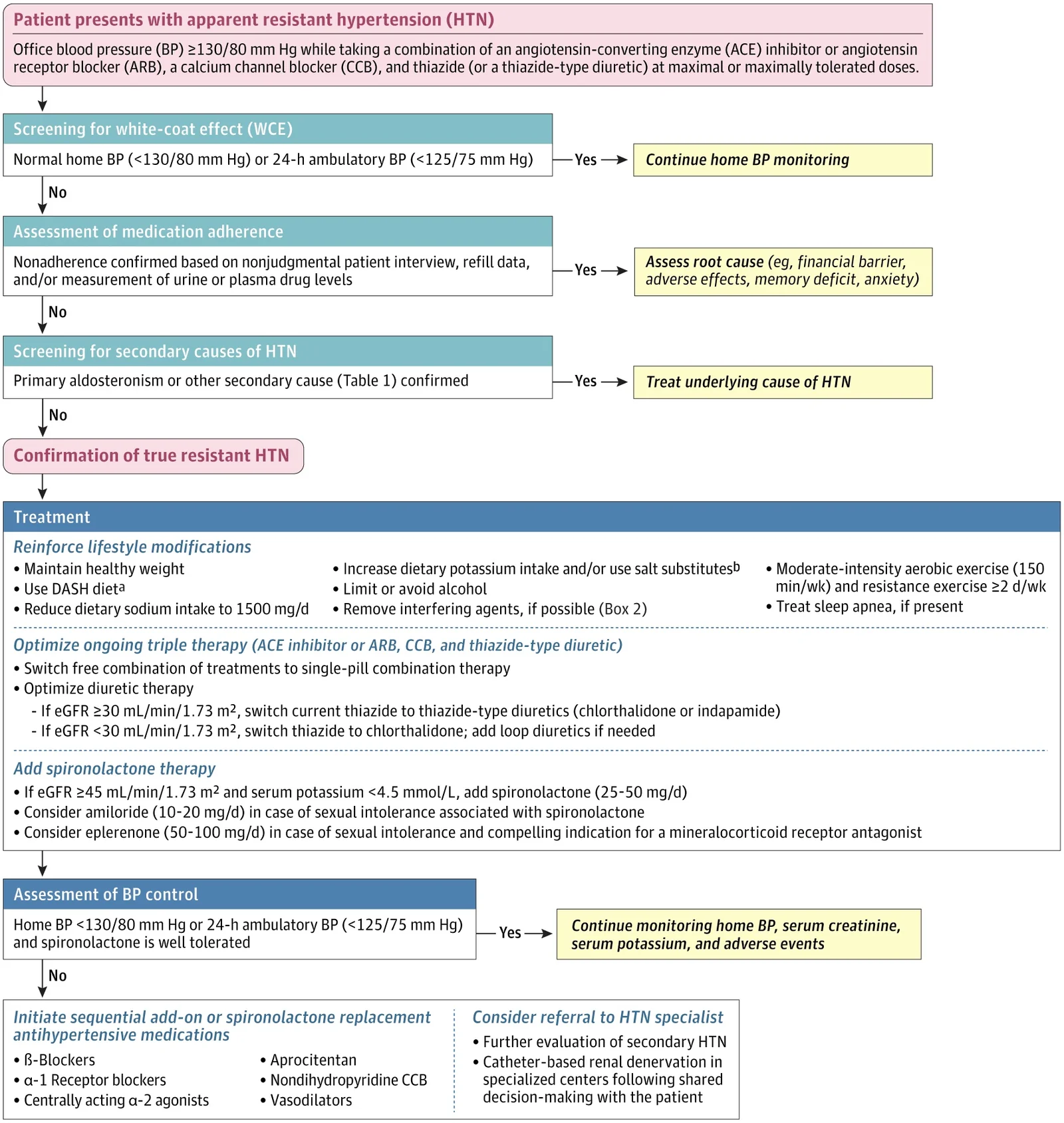 One image sums it up.
If I spell it out anyway:
- Definition of resistant hypertension: BP of 130/80 or higher despite three drugs from different classes, including a diuretic, at maximally tolerated doses (it should be an ACEi/ARB, CCB, and thiazide-type combination), or BP that needs four or more drugs to control. 24-hour ambulatory BP is best for confirming it.
- RESIST: a framework for checking whether it’s truly resistant. Rule out white coat hypertension, stop drugs or substances that raise BP, fix lifestyle, add more medication, look for secondary causes, and if it still doesn’t work, refer to a specialist.
- Start with a thiazide, and switching to a thiazide-like diuretic such as chlorthalidone or indapamide is recommended because it’s stronger and longer-acting (chlorthalidone is especially good in CKD).
- For a fourth drug, an MRA (spironolactone, eplerenone). Check renin and aldosterone before starting, and potassium and creatinine after. Don’t use it with hyperkalemia or eGFR < 30.
- For a fifth drug, consider aprocitentan or baxdrostat, together with a specialist.
- Baxdrostat is the first aldosterone synthase inhibitor, FDA-approved this May.
- Aprocitentan is an endothelin A/B receptor antagonist. Side effects include leg edema and fluid retention.
- If none of this works, renal denervation; it’s an adjunct option, and the effect versus sham is modest: 24-hour SBP −4.4 mmHg and office SBP −6.6 mmHg.
From a primary care point of view, the most useful part is probably RESIST. There’s so much to rule out before labeling someone resistant that it would be handy to build this into a template or workflow.
This got long, so I’m covering cardiovascular first and will write a separate post for the other guidelines.
References
- Development and Validation of the American Heart Association’s PREVENT Equations. Circulation. 2024. doi:10.1161/CIRCULATIONAHA.123.067626
- 2026 ACC/AHA/AACVPR/ABC/ACPM/ADA/AGS/APhA/ASPC/NLA/PCNA Guideline on the Management of Dyslipidemia. Circulation. 2026. doi:10.1161/CIR.0000000000001423 · also in JACC
- Cardiovascular-Kidney-Metabolic Health: A Presidential Advisory From the American Heart Association. Circulation. 2023. doi:10.1161/CIR.0000000000001184
- 2026 AHA/ACC/ADA/ASN Guideline for the Prevention, Detection, Evaluation, and Management of Cardiovascular-Kidney-Metabolic Syndrome. Circulation. 2026. doi:10.1161/CIR.0000000000001453
- AHA/ACC/ESC/WHF Expert Consensus Document: Second Universal Definition of Heart Failure (2026). Circulation. 2026. doi:10.1161/CIR.0000000000001455 · Global Heart, open access
- Management of Heart Failure With Preserved Ejection Fraction: 2026 ACC Expert Consensus Decision Pathway. JACC. 2026. doi:10.1016/j.jacc.2026.06.018
- 2025 AHA/ACC/AANP/AAPA/ABC/ACCP/ACPM/AGS/AMA/ASPC/NMA/PCNA/SGIM Guideline for the Prevention, Detection, Evaluation and Management of High Blood Pressure in Adults. Circulation. 2025. doi:10.1161/CIR.0000000000001356
- Optimizing Blood Pressure Care in Patients With Resistant Hypertension: 2026 ACC Expert Consensus Decision Pathway. JACC. 2026. doi:10.1016/j.jacc.2026.08.028
Comments
0Profile settings
Login to leave a comment.
환영합니다!
댓글에 사용할 닉네임을 설정해주세요.